My thoughts about this unpredictable process and the techniques I use.
What is monoprinting
Monoprinting is a printmaking method that results in a unique one-off print. There are a variety of different techniques to use. I gravitated towards this method for the painterly prints that you can get from it.
How I do it
I use oil paints on a plexiglass plate, which is a flat rectangle of thick plastic. Then I place paper on top and roll it through a monoprinting press, which is machine with a flatbed that slides under a roll. The painted plexiglass image is transferred onto the paper via pressure.
Process
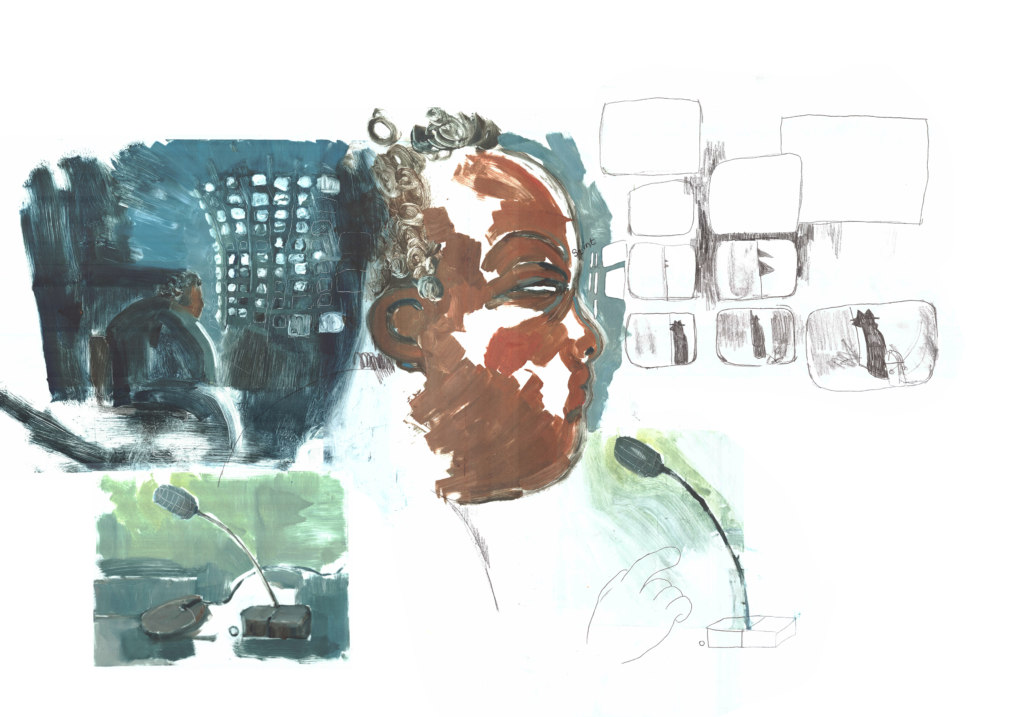
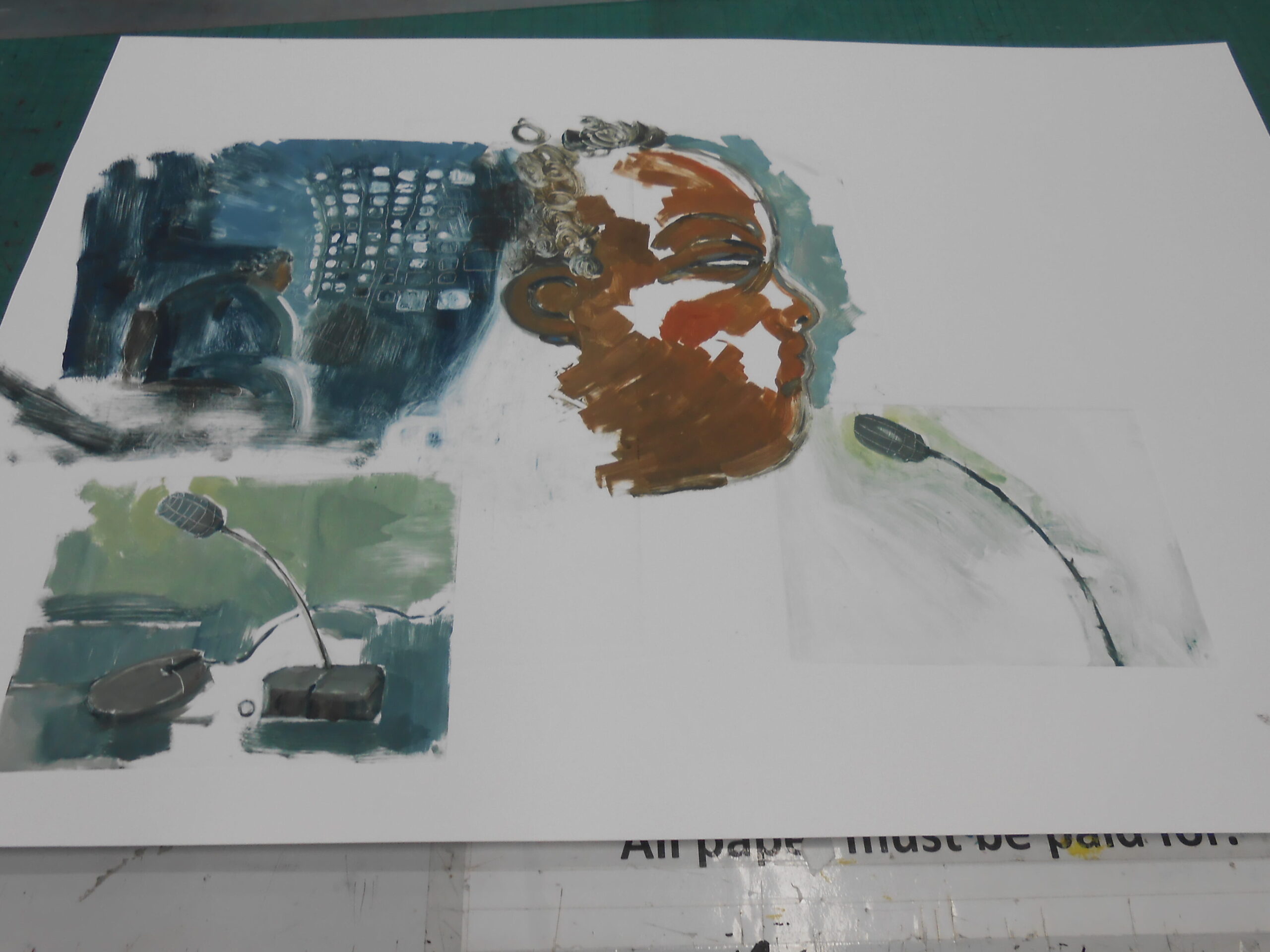
This illustration was made using monoprints and drawings. I think it’s a good example of the range of monoprinting techniques.
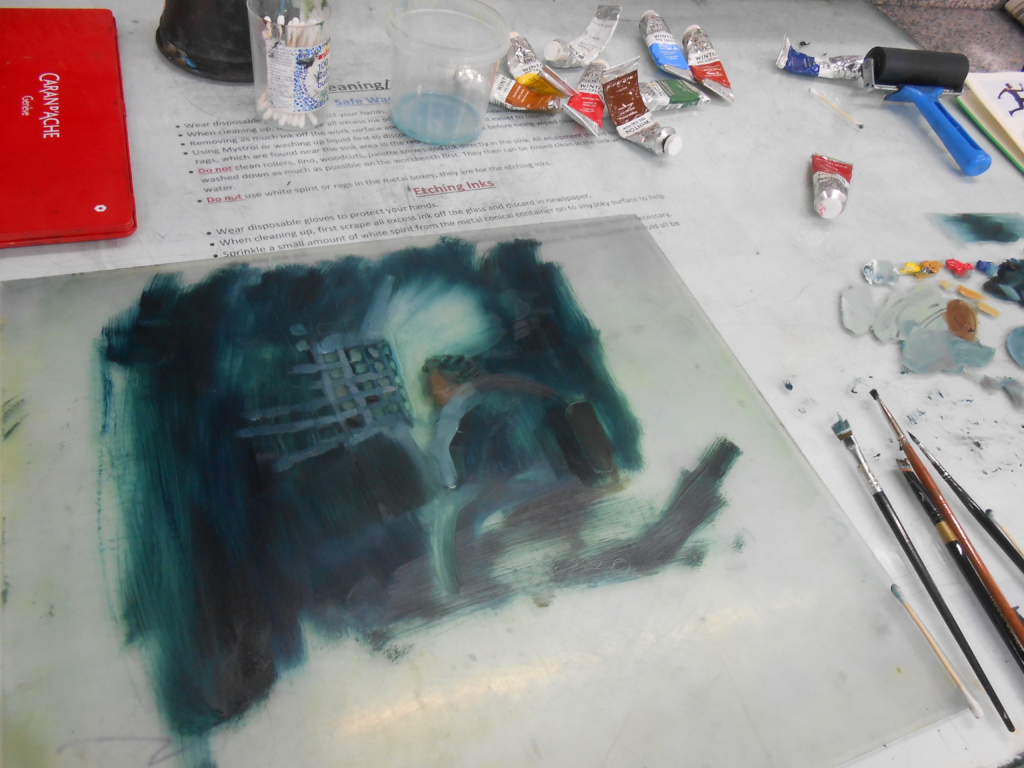
For this print, I used a subtractive technique. Where the plate is covered in paint, then wiped away to create light areas that form an image. Anything can be used to wipe off the paint. My favourite ways to do this is by using q tips and the wooden end of a paintbrush to get thin details. I used a dark blue base layer, then after wiping, I went back in to add some color to his face.
This method is the most counterintuitive for me. I find it difficult to carve an image out from the darkest values. It’s also the first way I was introduced to monoprinting in a workshop during my first year of uni. The results were too “muddy” for me, so I abandoned this process. But I find it to be the perfect way to visualise dark, murky atmospheres. Which was ideal for this image of a dim room illuminated by CCTV screens.
Something I’ve learned through trial and error in university is that there might not be such a thing as a “good” illustration. Maybe all that illustration is worth is its ability to communicate.
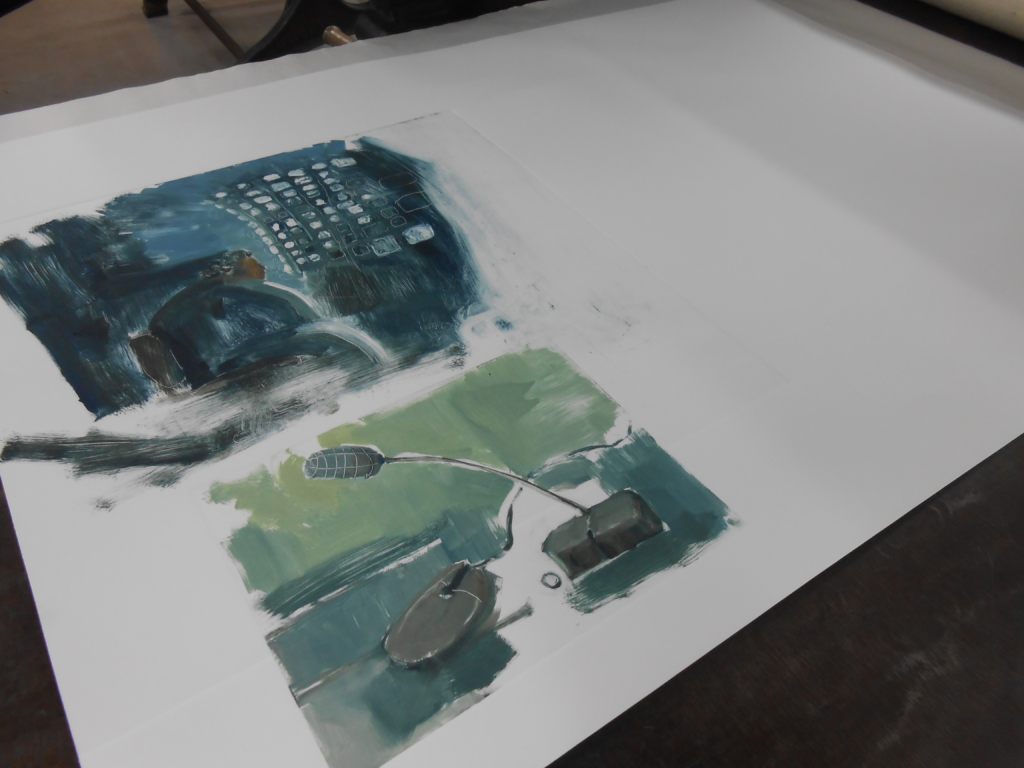
If I had made the above print on its own, under different circumstances, I probably would have hated it. But in this context, I quite like it.
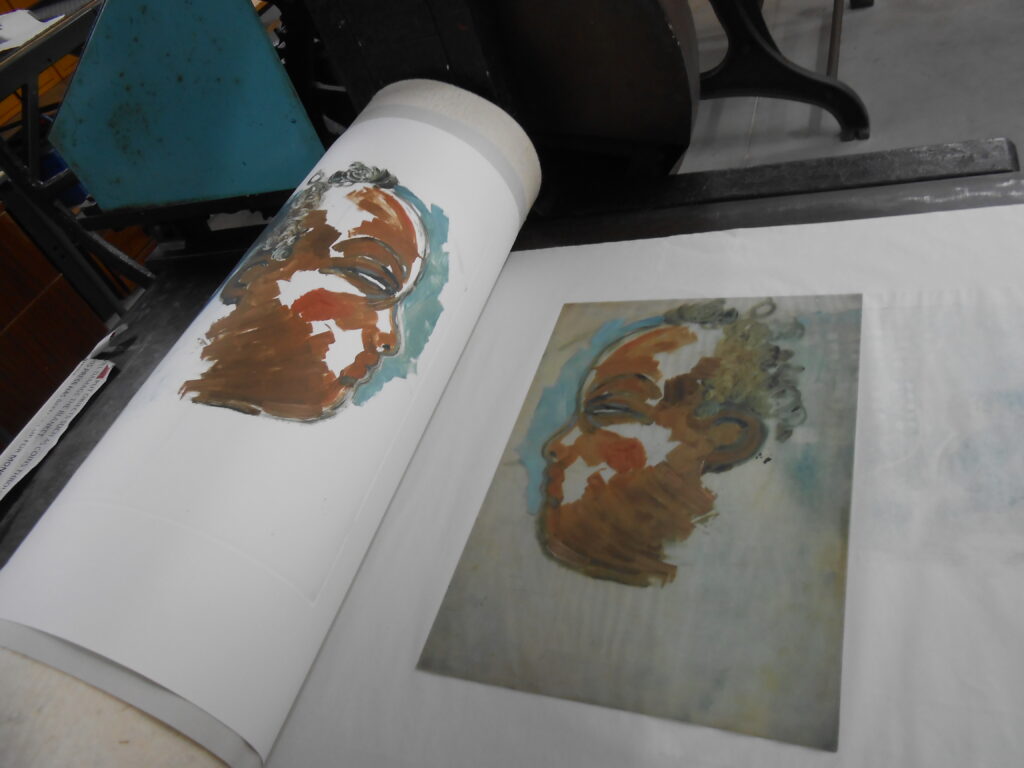
Another more straightforward way of monoprinting, is to paint on the plate like you would a canvas. This comes with some restrictions.
Layering paint on the plate is a gamble. All the colours I painstakingly mixed and layered get smushed into one colour once they are printed. Sometimes, it results in a good print, unexpected but pleasant. But other times it’s the cause of the “muddiness” in my earlier attempts that put me off monoprinting. To remedy this problem, I place each colour side by side, never on top of each other.
Ghost prints
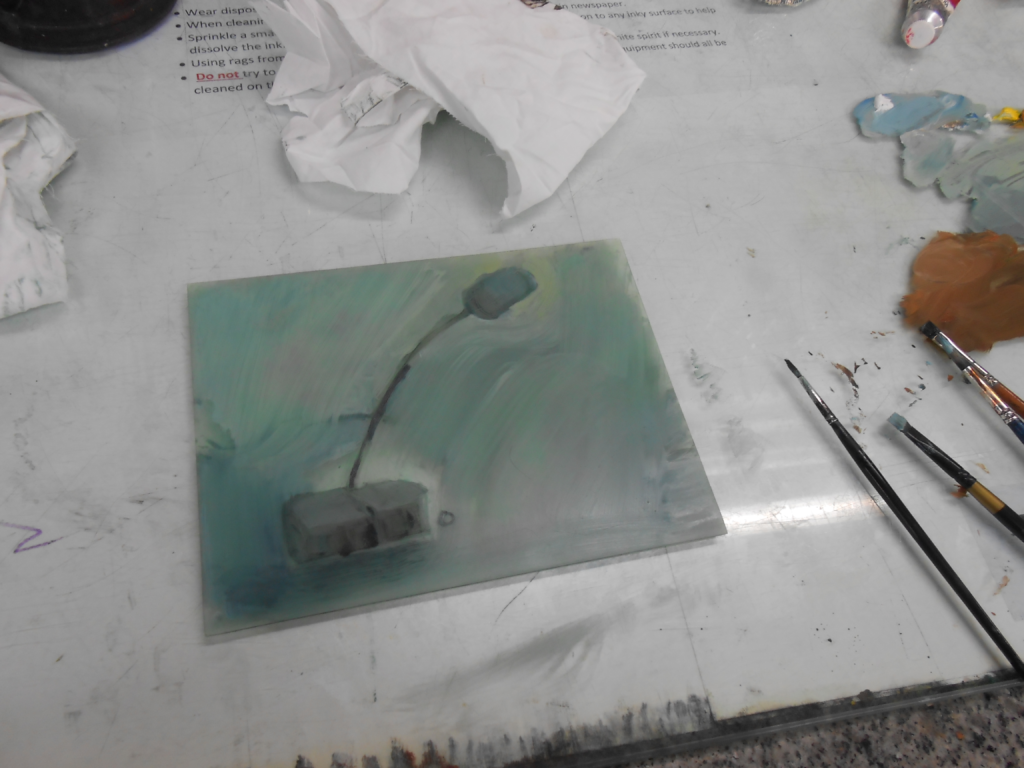
After every print, there is always a bit of leftover paint on the plexiglass. This can be printed again to make a fainter print of the original. They look dreamy and soft, which is the complete opposite of how my art usually looks.
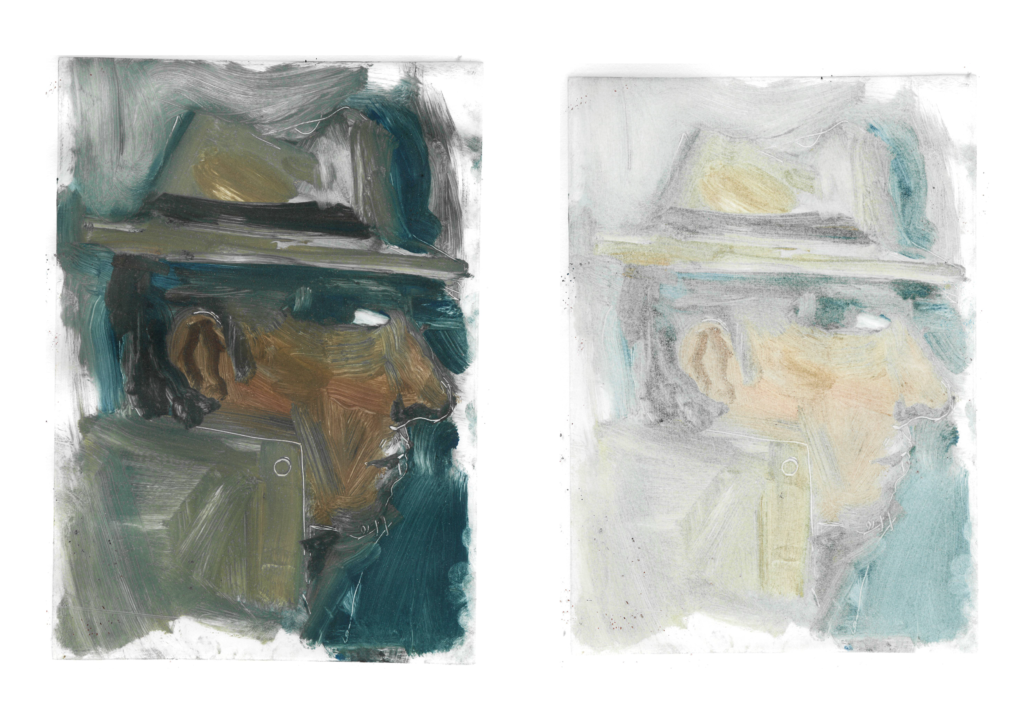
I love how ghost prints look. They bring out something in my art that I can’t consciously make. It’s an area of monoprinting that lends itself to a lot of experimentation. Like using it to illustrate movement in these tests below.
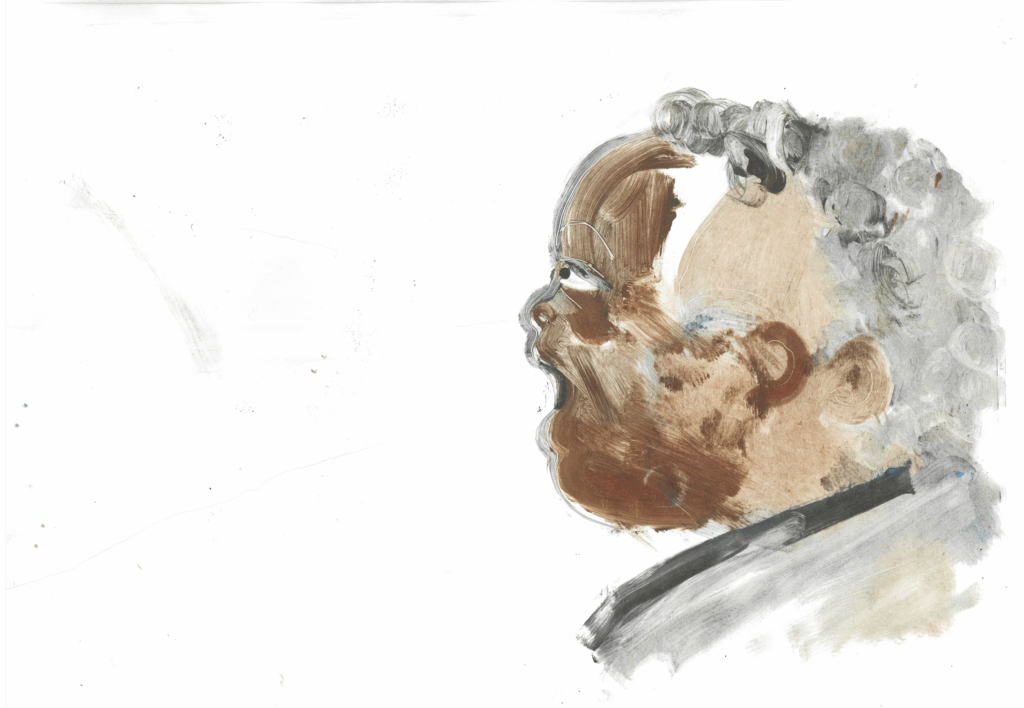
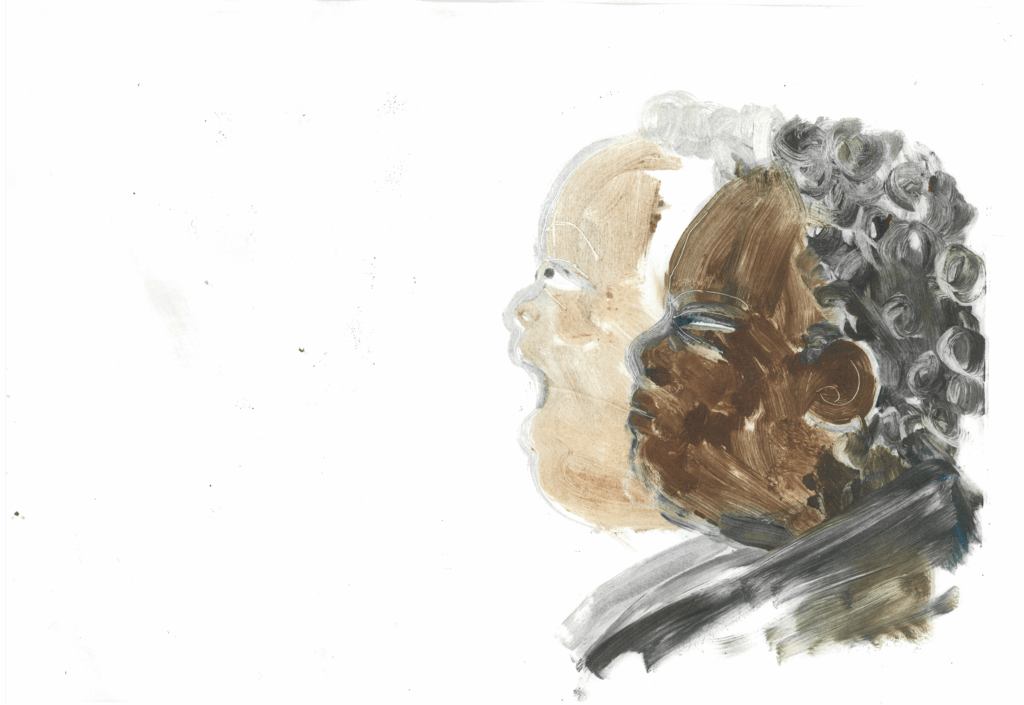
I also used it in the illustration as a way to repeat components. Like the microphone. I wiped away certain elements and touched it up a bit before reusing the plate.
I feel there is a lot of potential in this specific area of printmaking, that I haven’t scratched the surface of.
Why I like it so much
This all seems like a convoluted way to make a painting right? But there’s something about all of this that really grips me.
Immediate
I’m quite impatient when it comes to artmaking. It’s not that I don’t enjoy drawing. I just get restless whenever I render and toil away at a single illustration for hours. Especially now that I don’t value “pretty” and accurate images as much as I value spontaneous, energetic, surprising ones, which could be made in a matter of minutes.
Thinking my impatience was a bad habit, I constantly had a voice in my head telling me to slow down when I’m making, which felt counterintuitive and restricting.
Monoprinting was exactly what I was looking for, because rendering and toiling away at it for hours upon hours, is the worst thing you could do to it. The more you go over areas on the plate and the more indecisive you become, the oil paint that has nothing to stick to on the slick plexiglass becomes increasingly muddled. This results in a print that looks confused and excessive.
Unpredictable
The majority of the time spent printing, I’m looking at plexiglass with a painting that will look completely different once printed. Probably because the print will be mirrored, but also because the pressure does interesting things to the paint application. It can make dark areas lighter, brushstrokes more apparent, and overall, the final product that comes from the other side of the press is surprising and unexpected. For better or for worse. As George Pratt wrote on his website “It’s one of the few ways I get to see my work the way others might see it for the first time.”
I never thought unpredictability was something I wanted in my practice. But it’s this quality that allows me to find new visuals and techniques.
I can zoom out
I tend to get tunnel vision when I’m drawing or painting, focusing on minute details rather than the whole image. But when I monoprint, the focus shifts on composition, movement and value structure.
Tactile
I find the physical nature of this process appealing. There’s something ritualistic about it. Putting the plate on the press, then the paper on top, then the fabric, then spinning the wheel till the plate comes out the other side. It feels strangely tangible.
I came across this process last year while doing research for a uni project. As is usually the case with trying something new, the first few attempts were miserable.
But I stuck with it because I saw the potential in it. It was exactly what I was looking for. I make art to find something, I usually don’t know what I’m looking for. Often times, I end up making something uninspired, boring, unoriginal; usually things floating around my conscious mind from all the things I consume. Usually, I don’t go further than that. Monoprinting allows me to strip back that layer of noise. Every monoprint I’ve made I disliked at first. That is almost always the case. Until the print grows on me or doesn’t.
I’m obsessed with monoprinting!!
That made me nervous at first. I thought I should branch out and find other methods of art making, what if I don’t have these resources after I graduate? What if I’m boxing myself in? What if this leads to nothing?
But I had the realization that maybe instead of second guessing myself, I should just lean into my obsessions. It might flourish into something integral to my practice, or it might fizzle out into something I “once did”.
Either way I’m loving it now.
Hi, I really appreciate your blog to know about monoprinting. Thank you. I will stop by sometimes to see your blog.
Love,
Miku.
Hi Miku,
I hope you’re well.
I just checked out your website and your jewellery is lovely.
Thank you
Wow, this was so informational and it made me want to try it out too
Love the artwork as well!!
Thank you, Amina :))
loved this insight into your process!! i’ve never gotten on with monoprinting myself, but i always think yours are so unique and amzing, you inspire me to give it a second shot!!
Those are really kind words Melody. If you do give it a second try, please show me the prints!
This is so interesting, it’s so cool learning about your process. I loved what you said about leaning into being impulsive with monoprinting. Can’t wait to see more posts 🙂
Thanks Mariam!